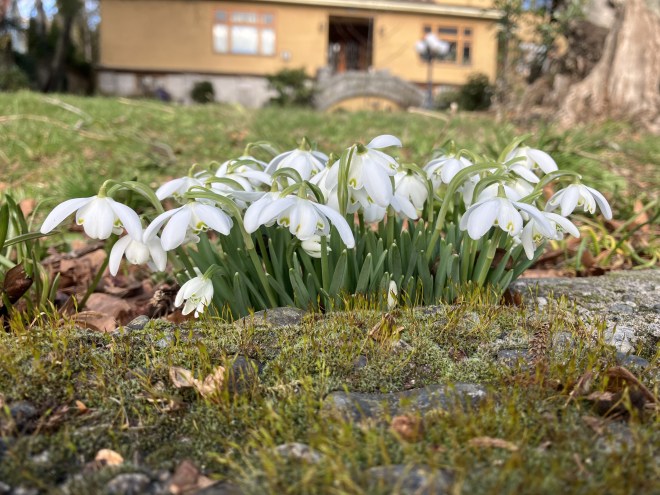
The soil is frozen and dusted with a layer of frost, but as much as a single burst of sunlight can convince the early risers to start poking their stems from the ground. When the snowdrops emerge, they come up in clusters. It’s rare to see one standing alone in a field of bedraggled grass and if you do, it sparks a sense of wistfulness. Snowdrops are better in a community. Even though we only see them once they’ve pushed free from water-sodden soil, it must be true that their bulbs also cluster together, pressing up against one another all through the spring, summer, and fall.
Snowdrops emerge from the ground early in the year, still in the midst of what is formally winter. Even before the mornings have gotten warm and the days have gotten long, they’ve already quietly faded, almost unnoticed as the springtime efflorescence begins in earnest.
Many flowers that grow from bulbs—tulips, daffodils, crocuses—will naturalize in the garden. They not only come back year after year, but they multiply by creating offshoots. That’s how the snowdrops and other early bloomers can end up cozied so closely together. After all, who wants to stick tender green shoots up into the frosty morning only to find themselves all alone? Who wants to brave a dump of snow, a stream of dog urine, or the patriarchy without a snuggly community of other flowers?
Despite the brightness of their white petals, snowdrops may look somewhat somber with their stamens pointing towards the ground. It’s a rarity to even be able to peer inside of the flower, unless you’re an ant. I wouldn’t recommend emulating the arch of their stem with the bend of your spine. When does it make sense to gaze downwards, to protect the sensitive parts of ourselves against the sharp winds of the world? Perhaps when, against all odds, we bloom into a world hostile to our presence.
Snowdrops don’t wait for winter to be over. They decide for themselves when it’s time to bloom.
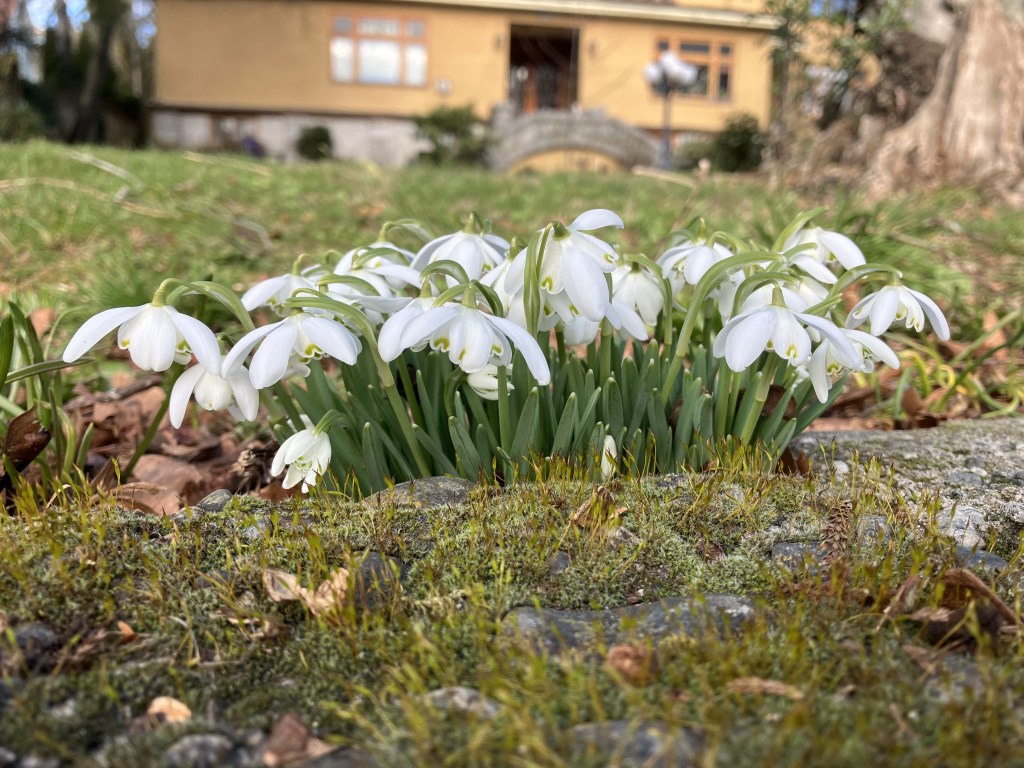
Image description: a cluster of snowdrops.


One thought on “Snowdrops”
Comments are closed.